Europe’s Farmer Protests: A Timeline from 2019 to Today
From Dutch tractors on the motorway to slurry on a French tax office and empty supermarket shelves in southern Italy, Europe’s farmers have spent seven years telling governments that something is wrong. This timeline sets out what happened, why, and what changed as a result.
Why farmers keep protesting
The grievances differ by country, but the pattern is familiar. Costs for energy, diesel, fertiliser and credit have risen sharply. Environmental rules have multiplied, often written far from the farm. Imports produced to lower standards compete on supermarket shelves. And farm incomes remain volatile, while the average farmer in the EU is getting older. When a new rule or a new cost lands on top of all that, the tractors come out.
2019: the Netherlands lights the fuse
29 May 2019. The Dutch Council of State strikes down the national nitrogen permit scheme (PAS), leaving thousands of projects without a legal basis. (We explain the background in Stikstof Explained.)
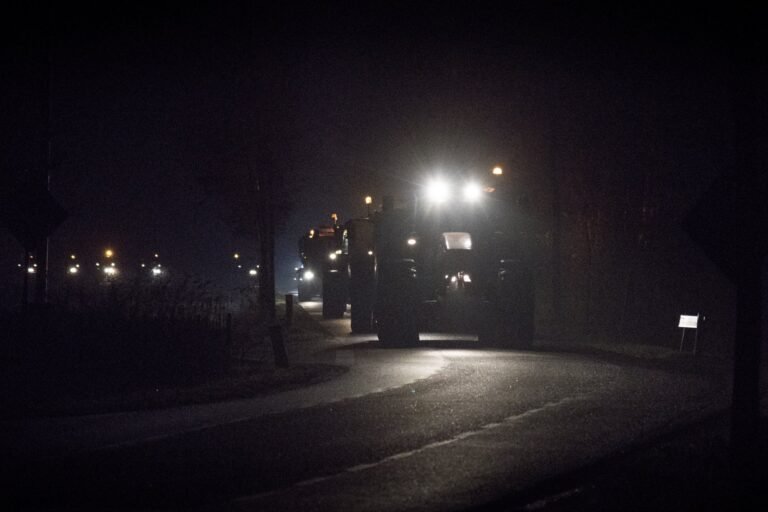
1 October 2019. Thousands of farmers drive to The Hague, causing what was then reported as the busiest morning of traffic jams in Dutch history. Both the protest group Farmers Defence Force and the BoerBurgerBeweging party were founded in the autumn of 2019.
December 2019. Further tractor protests in The Hague and in provincial capitals, as plans to cut livestock numbers circulate.
2020–2021: a pause, not a peace
The pandemic suppressed large gatherings, but the underlying conflicts sharpened. In 2020 the European Commission presented its Farm to Fork strategy, with targets such as cutting pesticide use and risk by 50 percent and reaching 25 percent organic farmland by 2030. Many farm organisations argued that the targets had been set without an impact assessment of what they would do to production and incomes.
2022: the map and the summer of blockades
10 June 2022. The Dutch government publishes a map with provincial nitrogen reduction targets, reaching up to 95 percent near some nature areas. Protests follow for weeks: distribution centres are blockaded, hay bales burn along motorways and upside-down flags appear across the countryside. The government appoints former minister Johan Remkes as a mediator.
That same year, after Russia’s full invasion of Ukraine, fertiliser and energy prices spike across Europe, adding a cost crisis to the regulatory one.
2023: the countryside votes
15 March 2023. The BoerBurgerBeweging wins the Dutch provincial elections and becomes the largest party in the Senate. Across Europe, politicians take note that rural discontent can change majorities.
Spring 2023. Farmers in Poland, Hungary, Romania, Slovakia and Bulgaria protest against the effect of duty-free Ukrainian grain imports on local prices, leading several governments to impose temporary national restrictions.
December 2023. In Germany, the federal government announces it will phase out the tax relief on agricultural diesel and the vehicle-tax exemption for farm machinery to close a budget gap. The farmers’ association calls a week of action.
2024: the year Europe’s tractors moved together
January 2024. Tens of thousands of German farmers block motorway access roads, culminating in a large rally in Berlin on 15 January. The government partly backs down, keeping the vehicle-tax exemption and phasing out the diesel relief more slowly.
Late January 2024. French farmers blockade motorways and set up a “siege” around Paris, protesting against diesel taxes, red tape and cheap imports. The government responds with a package of measures and drops a planned increase in diesel tax for farmers.
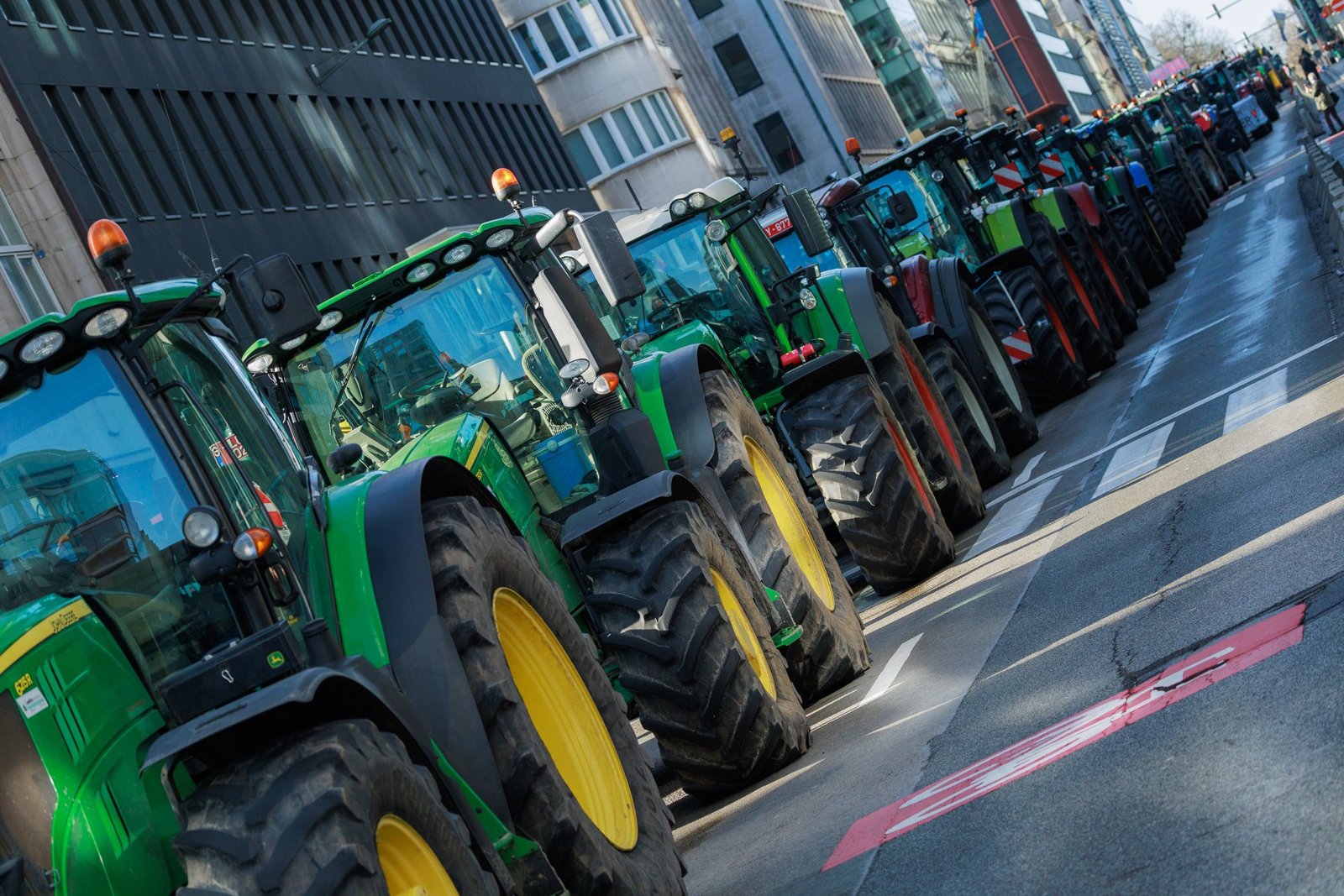
1 February 2024. As EU leaders meet in Brussels, hundreds of tractors fill the European quarter. On 6 February the President of the Commission announced the withdrawal of the proposed regulation on halving pesticide use, and on 15 March 2024 the Commission proposed a targeted review of the Common Agricultural Policy, easing several green-conditionality rules.
Through 2024. Protests also take place in Belgium, Spain, Italy, Poland, Romania, Greece, Ireland and the Baltic states, each with local triggers. The European elections in June see agriculture rise sharply as a campaign theme.
6 December 2024. The Commission and the Mercosur countries announce the conclusion of negotiations on a trade agreement. French, Belgian, Polish and Irish farm organisations protest, arguing that South American beef, poultry and sugar produced under different rules will undercut European producers.
2025–2026: costs come back
The new Commission promised a less burdensome approach to farming and a Vision for Agriculture and Food. But the next EU budget, for 2028–2034, revived fears about the future of the CAP. In October 2026 it was reported, and widely discussed on X, that a group of seventeen member states known as the “Friends of Cohesion” wrote to the Council presidency asking that farm and regional funding be protected in the negotiations.
1 October 2026. Members of the French union Coordination Rurale drive around twenty tractors to the public finance office in Guyancourt, near Paris, dump loads of green waste, soil and manure at the entrance and spray the façade, demanding that the price of off-road agricultural diesel (GNR) be capped at €1 a litre, La France Agricole reported.
Mid-October 2026. In southern Italy, truck drivers and farmers block motorways and ports in Calabria, Sicily, Campania and Puglia over diesel prices above €2.20 per litre. Shops run short of fresh food and many petrol stations run dry. On 22 October the Italian cabinet approves an emergency decree with extra tax credits for hauliers, a grant of up to 45 cents per litre for farmers’ fuel costs and support for fishing. The main haulage associations call off their action, but farmers in Calabria keep some pickets in place. By 23 October, ANSA reported that the last roadblocks in Campania had been removed, while the government warned it would not tolerate further blockades.
What the protests achieved
- Policy reversals. The withdrawal of the EU pesticide regulation, CAP simplification, and the partial German climbdown all followed protests.
- Political change. Agriculture moved from a niche topic to a central one in Dutch, French and European elections.
- A change of tone in Brussels. The language of “dialogue” with farmers, including the Strategic Dialogue on the Future of EU Agriculture launched in 2024, would have been hard to imagine in 2020.
What they have not solved
Input costs remain high, trade disputes are unresolved, and the money in the next EU budget is still being argued over. Blockades that empty supermarket shelves also test public sympathy, as Italy has just seen. The lasting lesson of the past seven years is simple: rules affecting the people who feed Europe work better when those people help write them. Protest is the symptom. Being left out of the decision is the cause.
Sources: European Commission (Farm to Fork, CAP simplification, Mercosur, Vision for Agriculture and Food); Italian Government, Council of Ministers press release no. 194 (22 Oct 2026); ANSA (23 Oct 2026); la Repubblica English edition (22–23 Oct 2026); public reporting on X summarised with attribution. Earlier events are drawn from public records and major European media.
Featured image: Farmers’ protest in Brussels. Photo: European Commission (Christophe Licoppe), CC BY 4.0, via Wikimedia Commons.