Stikstof Explained: What the Nitrogen Rules Mean for Dutch Farmers (2026)
Few policy words have shaped Dutch politics as much as stikstof. Seven years after a court ruling froze thousands of permits, The Hague has a new plan. Here is what it says, what it will cost farmers, and the questions it still leaves open.
Where the crisis began
The Netherlands is one of the most intensively farmed countries on earth, and it is also home to around 160 protected Natura 2000 nature areas, many of them small and surrounded by fields. Nitrogen compounds, above all ammonia from manure and fertiliser and nitrogen oxides from traffic and industry, settle on those habitats. Too much of it favours grasses and nettles over the rarer plants that EU law obliges the state to protect.
For years the country handled this with the Programma Aanpak Stikstof (PAS), a scheme that allowed new permits on the promise of future reductions. On 29 May 2019 the Council of State, the highest administrative court, ruled that this approach was incompatible with the EU Habitats Directive, because permits were granted against cuts that had not yet happened. Overnight, roughly 18,000 projects were thrown into doubt, from farm extensions to housing estates and road works. The country has spoken of being “op slot”, locked, ever since.
From protest to the ballot box
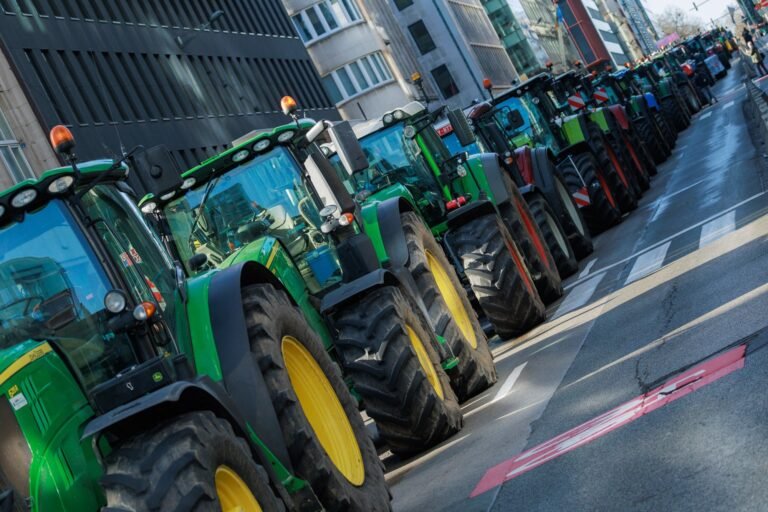
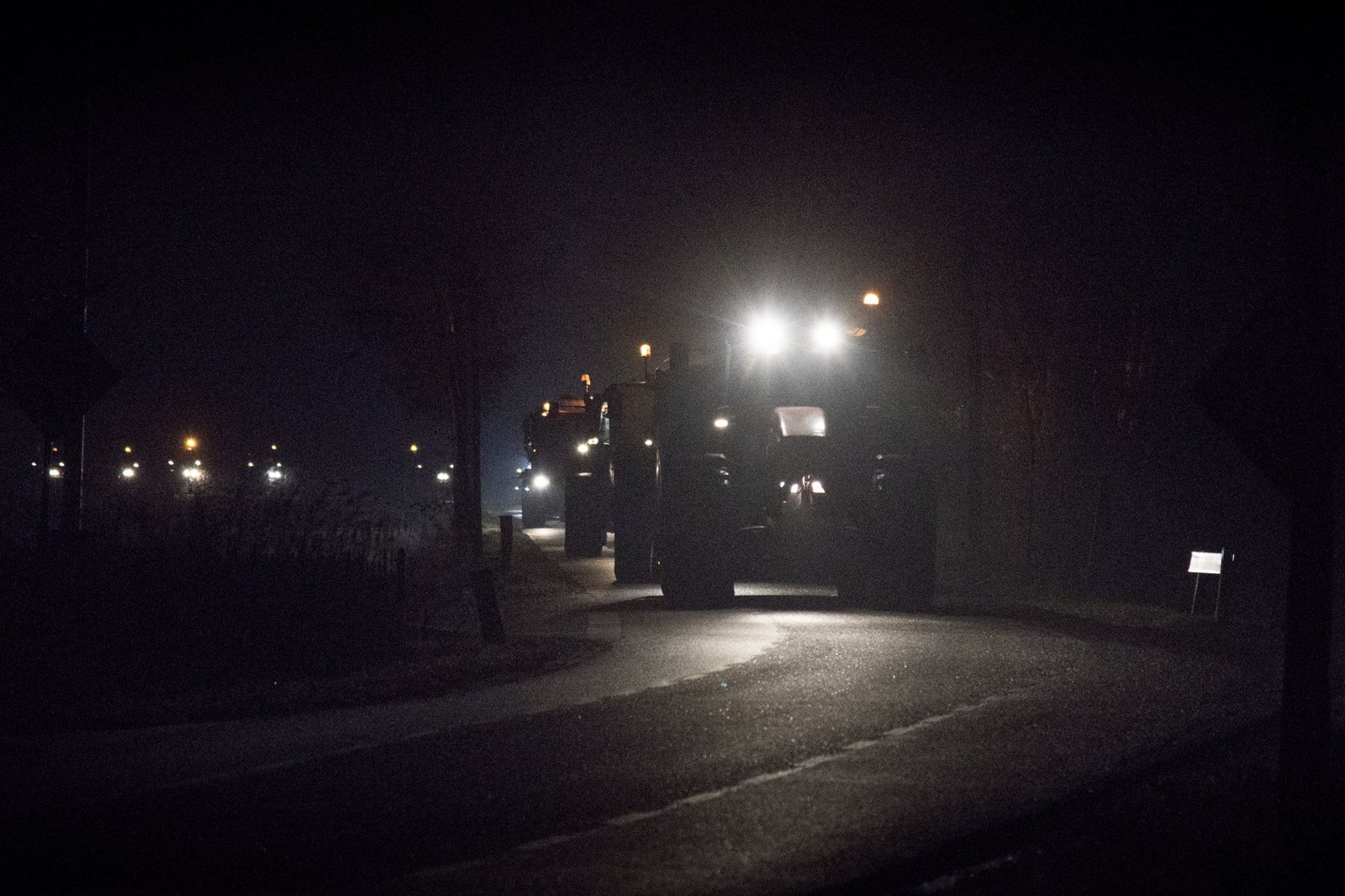
The response from the countryside was dramatic. In October 2019 thousands of tractors drove to The Hague. In June 2022 the government published a map with regional reduction targets of up to 95 percent in some areas near nature reserves, and the summer that followed saw blockades of distribution centres and motorways and the now-familiar upside-down Dutch flag on farm gates. In March 2023 the BoerBurgerBeweging (Farmer-Citizen Movement), founded only in 2019, won the provincial elections and became the largest party in the Senate. Whatever one thinks of the policy, it is hard to argue that rural voters had been heard before that result.
The June 2026 package
On 26 June 2026 the cabinet presented what it called a package to get the Netherlands off the nitrogen lock. Its main elements, as described on the government’s own explainer, are:
- A switch from deposition to emissions. The government says it no longer wants to steer on the kritische depositiewaarde (KDW), the critical deposition value of each habitat, which critics long described as a measure that could never be met. Instead it sets reduction targets per sector.
- Sector targets. Agriculture must cut nitrogen emissions by 42 to 46 percent by 2035 compared with 2019. Industry and transport are asked for 50 percent.
- Per-farm norms. From 2035 each farm gets a maximum for ammonia and greenhouse-gas emissions. For dairy the proposed norm is 0.164 kilograms of ammonia per phosphate right. Norms for pigs, poultry and veal calves are due in early 2027, and the cabinet says it will look at adjustments for organic and extensive farms.
- Zones around vulnerable nature. In bands of roughly 500 metres to one kilometre around sensitive Natura 2000 areas, stricter rules on fertiliser and crop protection may apply.
- Money. According to a letter to Parliament, the cabinet has set aside about €20 billion up to 2035 for the wider agriculture, nature and nitrogen approach, including support for new barns, feed changes and voluntary buy-outs.
The planning agency PBL has since reviewed the package. At the press conference after the cabinet meeting of 4 September 2026, the prime minister said the assessment showed the plans were “on the right track” but also produced “homework” to work the measures out further, in consultation with farm organisations.
What it means on the farm
For a typical dairy farmer the practical questions are concrete. Will a low-emission barn floor or a new feed ration bring the farm under 0.164 kilograms per phosphate right, or will herd size have to shrink? Will the subsidy for the investment arrive before the bank wants certainty? And will the technology that is approved today still count in ten years? That last point matters. Several earlier “emission-poor” barn systems turned out to perform worse in practice than on paper, and farmers who invested in good faith were left exposed when their permits were questioned in court.
The norm-based approach has one real advantage, and the cabinet leans on it: it lets the entrepreneur choose how to reach a number, rather than having the state prescribe a single route. Farmers who already cut emissions over the past years should see that effort counted. That is a principle many in the sector have asked for since 2019.
The zones are a different matter. A farm that happens to sit 600 metres from a heathland may face rules that a neighbour two kilometres away does not, through no choice of its own. Such farms will want clear compensation, and a clear answer on what their land is still worth.
The courts have not gone away
Any political plan must also survive judicial review. On 22 January 2025 the district court of The Hague, in a case brought by Greenpeace, ordered the state to meet its own statutory target of bringing half of nitrogen-sensitive nature below the critical value by 31 December 2030, giving priority to the most vulnerable areas, on pain of a €10 million penalty. Moving away from the KDW as a steering tool will therefore be tested against the obligations of the Habitats Directive, which do not change because a cabinet changes. A plan that collapses in court in 2028 would repeat the mistake of the PAS, and the people who would pay for it are again the farmers and home buyers waiting for permits.
Fair questions to keep asking
- Is the burden shared? Agriculture is the largest Dutch source of ammonia, but traffic, industry, aviation and foreign emissions also contribute to deposition. The 50 percent ask of industry and transport should be monitored as closely as the farm norms.
- Is the measurement sound? Farmers will be judged on calculated emissions per farm. The models need to be transparent and open to challenge.
- Is the support reliable? €20 billion is a large sum, but schemes that change every coalition term destroy trust faster than money can rebuild it.
- Who decides locally? Provinces have taken different routes in recent years. The cabinet wants a level playing field. Rural communities want room for local judgement. Both are legitimate, and the balance is a question of subsidiarity.
The bottom line
The 2026 package is the most coherent attempt yet to end the nitrogen deadlock, and its emphasis on norms rather than buy-outs is welcome. But it is still a plan, not a law that has been tested in court. Dutch farmers produce some of the most efficient food in the world and steward much of the landscape the public loves. They deserve rules that are stable, measurable and fair, and a seat at the table while those rules are written. We will follow the next steps, including the livestock norms due in early 2027, as they appear.
Sources: Rijksoverheid (26 June 2026; theme page on nitrogen plans; press conference 4 September 2026); Tweede Kamer, Kamerstuk 36 800 XIV nr. 84. Background on the 2019 Council of State ruling and the 2022–2023 protests is drawn from public records and major Dutch media.
Featured image: Farmers protest against nitrogen policy, 18 December 2019. Photo: BakkeBaarend, CC BY-SA 4.0, via Wikimedia Commons.