
European Heritage Sites at Risk: 10 Monuments Worth Protecting
Europe’s cathedrals, old towns and cultural landscapes are not a museum collection. They are the places where our ancestors prayed, traded and governed, and they are under pressure from war, fire, mass tourism, climate and careless development. Here are ten sites, and the lessons they teach about protecting what we inherit.
The list below draws on UNESCO’s List of World Heritage in Danger, on the 7 Most Endangered programme run by the heritage federation Europa Nostra, and on public records of each site. It is not a ranking. Each site stands for a different kind of threat.
War
1. Historic Centre of Odesa, Ukraine
Odesa’s 19th-century centre, with its opera house, boulevards and the Potemkin Stairs, was inscribed on the World Heritage List in January 2023 through an emergency procedure, and placed directly on the danger list. Russian strikes have since damaged buildings in the historic centre, including the Transfiguration Cathedral in July 2023. UNESCO listing.
2. Kyiv: Saint-Sophia Cathedral and Kyiv-Pechersk Lavra, Ukraine
The 11th-century Saint Sophia, with its Byzantine mosaics and frescoes, is one of the founding monuments of Eastern Christianity. In September 2023 UNESCO added it, together with the Lavra monastery complex, to the danger list because of the threat of attack. UNESCO listing.
3. Historic Ensemble of Lviv, Ukraine
Lviv’s old town, a meeting place of Central European architectural traditions, was added to the danger list at the same session. Its churches and squares had been spared direct hits on the centre, but the risk is real and ongoing. UNESCO listing.
The lesson of these three is that heritage is often a target precisely because it embodies a people’s identity. Documentation, digitisation and the removal of movable treasures to safety are the first line of defence.
Fire and neglect
4. Notre-Dame de Paris, France
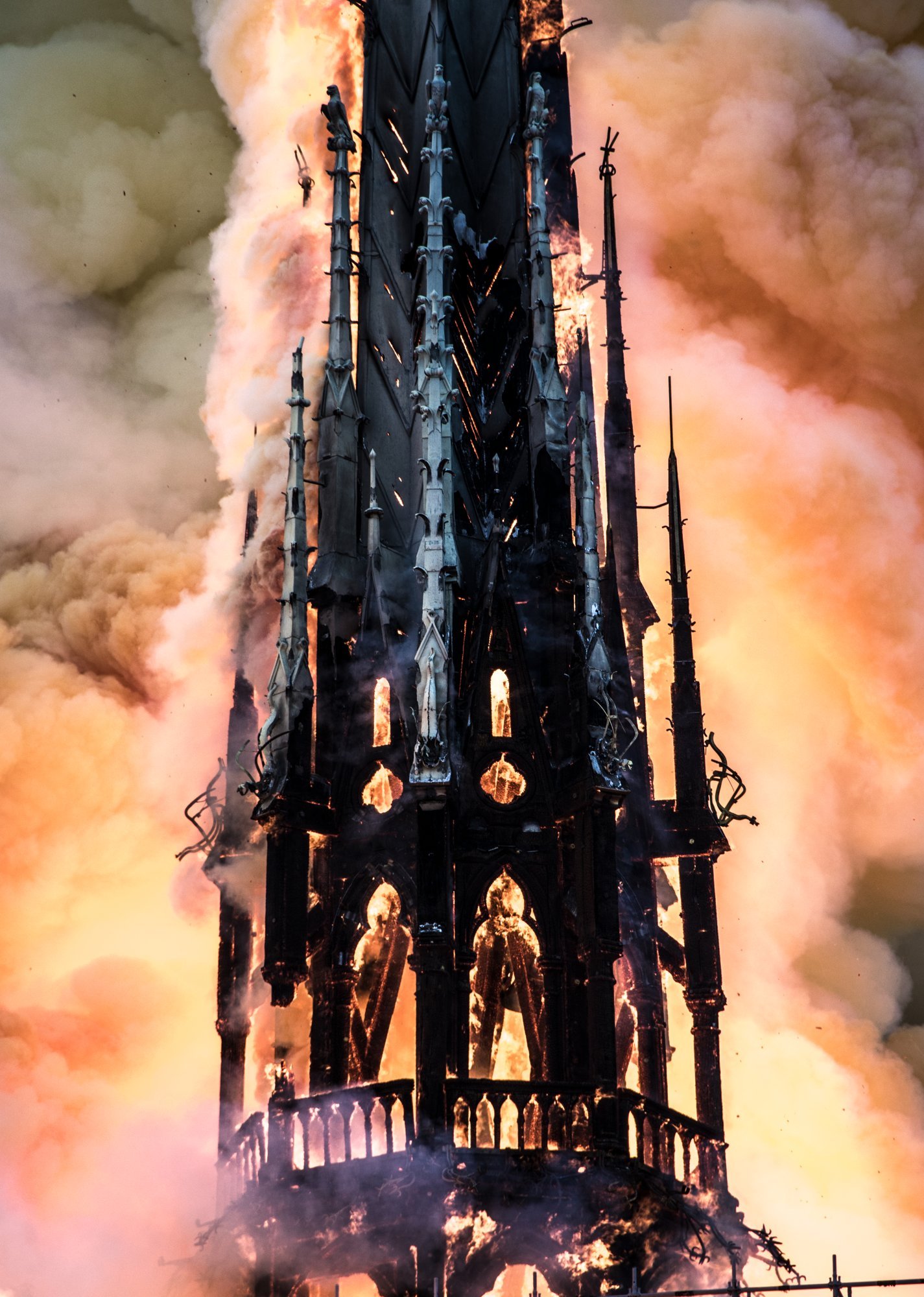
On 15 April 2019 fire destroyed the roof and spire of the cathedral, part of the World Heritage site of the banks of the Seine. Donations from France and abroad funded a restoration that rebuilt the spire to the 19th-century design of Viollet-le-Duc and reopened the cathedral in December 2024. Notre-Dame shows both how fragile old buildings are and how strong the public will to save them can be. It also showed that timber roofs need modern fire detection and that restoration skills, such as those of carpenters and stonemasons, must be kept alive. UNESCO listing.
5. Pompeii, Italy
The collapse of the House of the Gladiators in 2010 put Pompeii under international scrutiny. A large EU-funded programme, the Great Pompeii Project, followed, and the site is in better shape today. The lesson: excavation without long-term maintenance turns heritage into ruins a second time. UNESCO listing.
Too many visitors
6. Venice and its Lagoon, Italy
In 2023 UNESCO experts recommended adding Venice to the danger list because of mass tourism, depopulation and rising water. The World Heritage Committee decided not to, after the city banned large cruise ships from the lagoon centre and introduced an entry fee for day visitors in 2024. The MOSE flood barriers now protect the city against the highest tides. Venice is still losing residents, and a city without inhabitants is a stage set, not a living heritage. UNESCO listing.
Development without restraint
7. Dresden Elbe Valley, Germany (delisted)
Dresden’s cultural landscape was removed from the World Heritage List in 2009 after a four-lane bridge was built through the protected valley. It was only the second site ever to lose its status. Local voters had approved the bridge in a referendum, which shows that heritage and local democracy can pull in different directions, and that the choice should be made with open eyes. UNESCO listing.
8. Liverpool Maritime Mercantile City, United Kingdom (delisted)
Liverpool lost its World Heritage status in 2021 after large waterfront developments, including plans for a new stadium, were judged to have destroyed the authenticity of the historic docks. Supporters of the projects argued that the city needed jobs. Both points are fair, and the case remains a lesson in how heritage and renewal must be planned together from the start. UNESCO listing.
Water and climate
9. Mill Network at Kinderdijk-Elshout, Netherlands
The nineteen mills of Kinderdijk tell the story of how the Dutch made land from water. They are still maintained by millers who live in them. Their threat is quieter: rising maintenance costs, visitor pressure on a small village, and the loss of craft knowledge. Keeping traditional trades alive is as much heritage protection as keeping the mills standing. UNESCO listing.
10. The Wadden Sea, Netherlands, Germany and Denmark
The world’s largest unbroken system of tidal flats is a natural site, but its islands and terpen (dwelling mounds) carry centuries of human history. Sea-level rise, gas and salt extraction and shipping are all watched closely. It is also a living example of three countries cooperating to protect a shared landscape. UNESCO listing.
What protecting heritage really requires
Looking across these ten sites, a few principles stand out:
- Maintenance beats rescue. Regular care, fire safety and monitoring cost far less than rebuilding after disaster.
- Living communities matter. A historic centre empty of residents loses its soul. Housing, local shops and local schools are heritage policy.
- Crafts are heritage. Stonemasons, carpenters, millers and stained-glass makers carry knowledge that cannot be downloaded.
- Local voices should be heard. Dresden and Liverpool show what happens when local priorities and international status collide. The best outcome is a decision made locally, with full knowledge of what is at stake.
How you can help
Visit off-season and stay overnight rather than day-tripping. Support local restoration funds and volunteer associations. Follow Europa Nostra’s 7 Most Endangered list and national heritage registers. And above all, learn the story behind the stones and pass it on. A heritage that is no longer understood will not be defended for long.
Sources: UNESCO World Heritage Centre listings and List of World Heritage in Danger; Europa Nostra 7 Most Endangered programme; public records of each site.
Featured image: The spire of Notre-Dame de Paris burning, 15 April 2019. Photo: LEVRIER Guillaume, CC BY-SA 4.0, via Wikimedia Commons.