Germany’s Agrarian Crucible: Fiscal Cuts, Fertilizer Mandates, and the Struggle for Food Sovereignty
Across Germany, agricultural enterprise stands at an uncomfortable crossroads. Years of policy disputes over environmental directives, fiscal consolidation, and trade concessions culminated in historic tractor demonstrations that paralyzed major cities from Berlin to Magdeburg. At the heart of these grievances was the coalition government’s planned phase-out of the long-standing agricultural diesel tax refund—a critical fiscal relief mechanism designed to preserve the competitiveness of primary producers operating on narrow margins within the European Union’s single market.
As the phase-out took effect through multi-stage reductions in tax relief, the immediate consequences became visible not only in farm ledgers but in administrative data. According to reports published by Sachsen News, statistics from state revenue offices indicate a sharp decline in refund applications, illustrating both the reduced economic incentive and the increasing administrative burden placed upon family farm operations. However, fiscal austerity represents only one vector of the operational pressures confronting German agriculture. Compounding these tax changes is a parallel overhaul of environmental regulations—specifically the implementation of the EU Nitrates Directive and the contentious national fertilizer ordinance (Düngeverordnung).
The Erosion of Fiscal Safeguards: Agricultural Diesel Tax Reductions
For decades, German agricultural producers benefited from partial reimbursement of energy taxes on fuel used for land cultivation and farm machinery. Under the established framework, farmers could claim a refund of 21.48 cents per liter of diesel fuel. This measure was intended to level the playing field against international competitors whose fuel taxation regimes are significantly lower, thereby safeguarding domestic food production capacity.
The Federal Ministry of Food and Agriculture and the Federal Ministry of Finance executed a phased reduction of this reimbursement as part of federal budget consolidation efforts. The resulting financial shock prompted widespread mobilization by the German Farmers’ Association (Deutscher Bauernverband), as documented in statements reported by Die Sachsen, which argued that removing the fuel tax relief severely undermines farm liquidity and threatens rural business survival. Reports from regional state authorities reveal that as the refund rate was trimmed, overall application volume dropped, reflecting a contraction in farm capital expenditure and driving smaller operational units toward marginal viability.
Environmental Compliance and the Redefinition of Fertilizer Regulations
While fuel tax policy directly impacts immediate operating costs, environmental compliance mandates determine long-term land utilization. Germany’s prolonged legal dispute with the European Commission over non-compliance with the 1991 EU Nitrates Directive forced successive statutory revisions to national farming guidelines. Official technical documentation from the Federal Ministry of Food and Agriculture (BMEL) details how strict nutrient management protocols were enacted to avert multi-million euro daily fines threatened by the European Court of Justice. These guidelines designated widespread “red zones” (Rote Gebiete)—nitrate-vulnerable areas subject to mandatory 20% reductions in nitrogen fertilization below regional crop requirements.
A comprehensive academic review published in Springer Nature’s Environmental Sciences Europe outlines how agricultural state ministers and federal officials subsequently reached agreements to transition from broad, blanket territorial designations toward a regionalized and farm-specific fertilization monitoring model. While intended to reward targeted nutrient management and incentivize precision farming, the transition imposes strict administrative reporting requirements, costly soil testing regimes, and structural investments in manure storage infrastructure. For medium-sized family farms, the capital requirements for compliance often exceed annual operational margins, driving consolidation toward larger agribusiness conglomerates.
Global Trade Pressures and the Mercosur Conundrum
Domestically imposed regulatory costs intersect critically with European Union trade policy. German agricultural organizations have voiced sustained opposition to the pending EU-Mercosur free trade agreement, which seeks to eliminate tariffs on agricultural imports from South American nations, including beef, poultry, and sugar. Domestic producers contend that importing agricultural commodities produced under regulatory, labor, and environmental standards substantially less strict than the EU Nitrates Directive creates severe market asymmetry.
Proponents of the trade agreement, including industrial export sectors in Germany, argue that access to South American markets for machinery and automotive goods outweighs the localized disruptions to primary agriculture. However, agricultural advocates point out that imposing costly green transformation mandates on European farmers while simultaneously opening domestic markets to unconstrained foreign production erodes national and continental food sovereignty, increasing reliance on external supply chains during global crises.
Sovereignty, Land Continuity, and the Structural Transformation of Farming
The convergence of fiscal retrenchment, regulatory compliance, and trade liberalization is accelerating structural shifts within the German rural economy. Data on farm continuity highlights a steady decline in the number of active agricultural enterprises, accompanied by an increase in average farm size. Younger generations face substantial financial barriers to entry, driven by escalating land lease values, high capital requirements for machinery, and unpredictable policy frameworks that alter regulatory conditions across short electoral cycles.

This structural transformation carries significant political and social implications for rural regions. When local farming becomes economically precarious, the social fabric of rural communities weakens, diminishing local processing capacity and regional supply security. Maintaining domestic agrarian capacity is increasingly recognized not merely as an economic policy choice, but as a core pillar of national security and environmental stewardship.
What to watch
In the coming months, several critical indicators will determine the trajectory of German primary agriculture and rural policy:
- Federal Budget Negotiations: Monitor whether parliament introduces compensatory tax mechanisms or infrastructure grants to offset the final stages of the agricultural diesel subsidy removal.
- Implementation of the Regionalized Fertilizer Model: Watch the administrative roll-out of the updated Düngeverordnung to see if farm-level monitoring provides measurable relief to compliant producers in red zones.
- EU-Mercosur Ratification Debates: Track legal and parliamentary hurdles within the European Council and national legislatures as agricultural lobbies push for enforceable mirror clauses.
- Farm Consolidation and Generational Renewal Statistics: Observe annual land use and business registration metrics from the Federal Statistical Office (Destatis) to assess the rate of enterprise exit among small and medium producers.
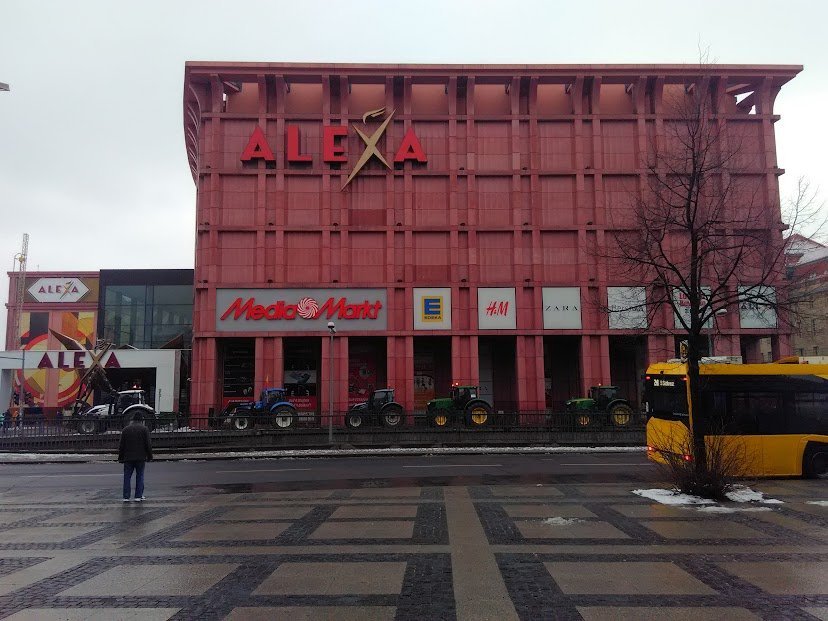
Featured image: farmers with tractors protesting in central Berlin. Photo: Editorq35, CC0 1.0, via Wikimedia Commons.